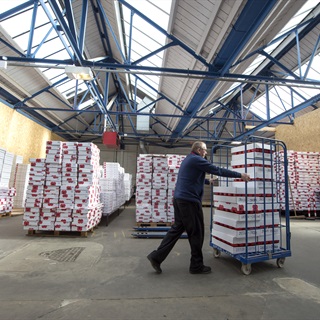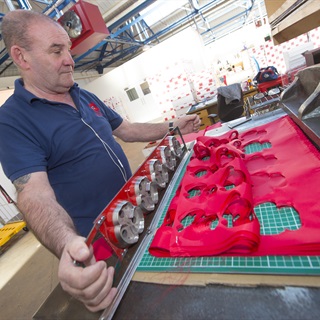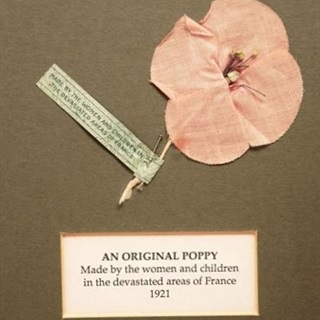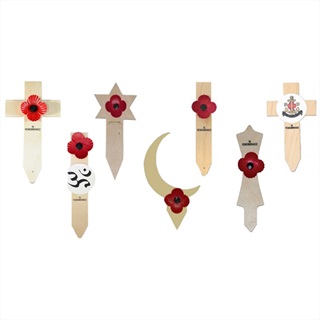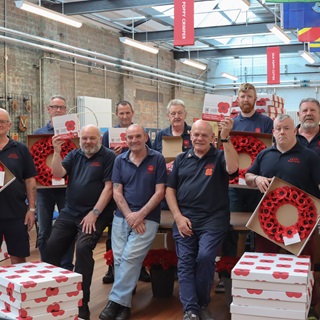




Lady Haig's Poppy Factory has been making poppies and supporting veterans since its founding 100 years ago.
After so much time, it won't surprise you that there have been quite a few changes through the decades.

At the start
Initially, The Earl Haig Fund sourced poppies from England but, few of those poppies made it to Scotland. In 1926, Lady Dorothy Haig suggested that a factory to make poppies specifically for Scotland be established. Additionally, she suggested that it should employ men disabled by war. The idea was taken up and premises found in the grounds of Whitefoord House on the Canongate section of the Royal Mile.

The workforce started out small - “three workers, a pair of scissors and a piece of paper” - but expanded quickly to make the bulk of the poppies required for Scotland.
By the end of its first year, 28 men were employed, many with severe disabilities, producing more than 1.8 million poppies and hundreds of wreaths for Scotland.


The golden years
During the 30s, the factory continued to grow as it enjoyed great prosperity. An extension was added to the premises to accommodate the growing workforce and demand for the variety of high-quality goods being produced.
The workforce grew to 117 with a waiting list of 338 hoping to join them. Most worked in the factory, but some worked in the newly opened shops – selling toys, lampshades, woven goods and other handicrafts.
Demand was such that if you could not reach the factory to purchase the handmade goods, the factory would come to you. A travelling shop was introduced which drove all round Scotland and toys made in the factory were sold on 25 cruise liners sailing across the world.


This excerpt from the Evening News (12 December 1934) describes the factory’s remarkable impact during the 1930s, highlighting how it provided meaningful work, stability, and renewed dignity for men who had long struggled to find employment.
"His workmate, who moves about on one leg, is also attending wood-working machinery. After two years in hospital he spent five fruitless years looking for employment, but employers looked askance at him considering he was danger to himself to attempt to manipulate machinery in his physical condition, but at long last he found a niche here.
Six of a family he has, and two of them at the University. The above are not selected, but typical examples of the men, and their experiences may be taken as applicable in a smaller or greater degree to all.
Their meagre pensions are doubled and trebled by wages. They have pride in themselves and their work. They know they are no longer a drain on the market and a charge on charity. No longer does the dread spectre of unemployment hang over their heads. They are wage earners. The factory has given them, in addition to a living wage, that greatest of all assets, self respect.
They are happy, and because of this their health has improved out of all recognition. Bitterness among them is unknown.”
Evening News, December 12, 1934


Changing times
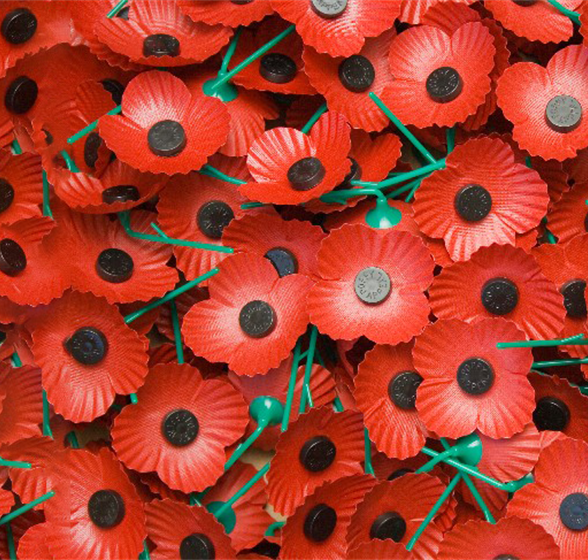
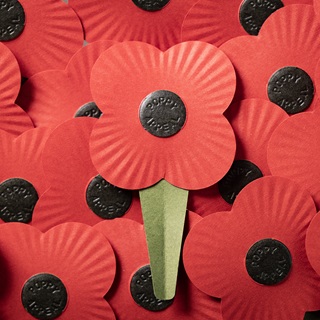
Also introduced in this period - in 1955, to be precise - was the standard lapel poppy, almost identical to the one we use today.
Through the 60s and 70s, the rising operational costs made self-sufficiency increasingly difficult, while at the same time, fewer people were looking to work in the factory. By 1975, there were 51 employees with a waiting list of 3; by 1980, the number had fallen to 35 with no reserves. By 1981, the factory's future was uncertain.
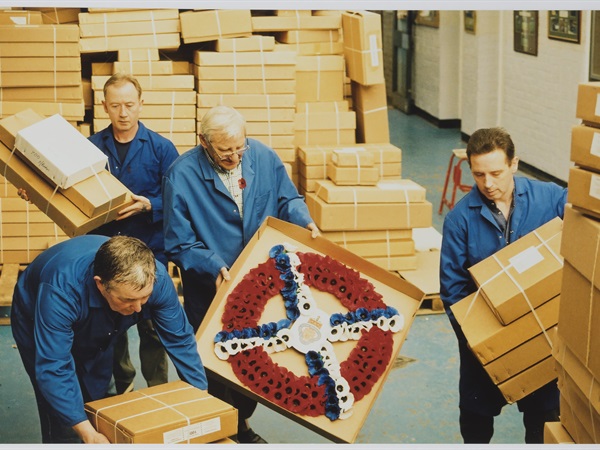
1970 – 2000
The decade came to a dramatic close when - in Spring of 2000 - the Water of Leith burst through the protecting wall, flooding the factory and destroying over one million poppies.
It says everything for the spirit of the men that, through working at weekends, the shortfall was made up in time for the Year 2000 Poppy Appeal.
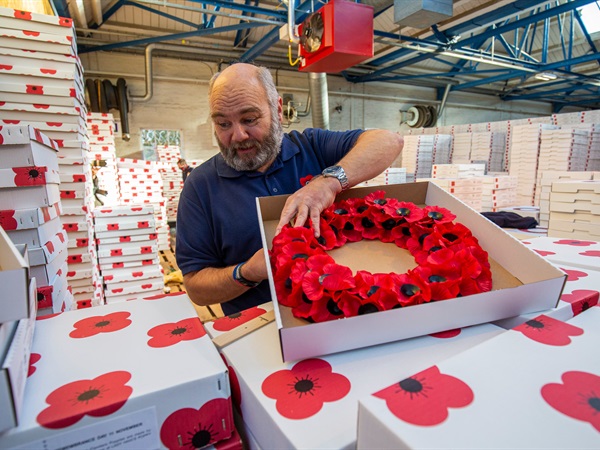
21st Century
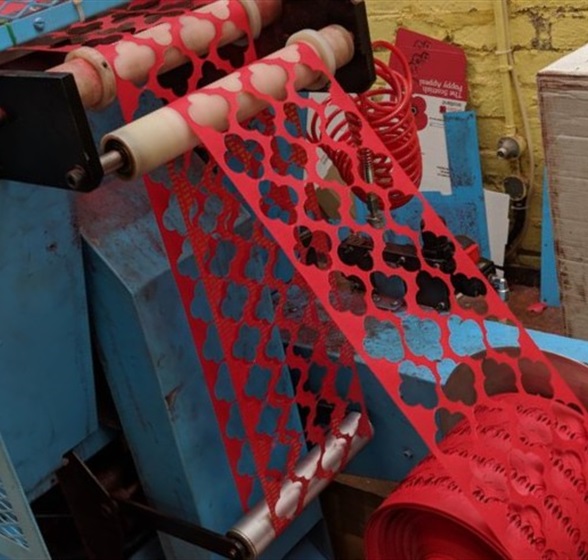
The first decades of the 21st century have brought a programme of modernisation and great changes to the factory.
- production and operations were updated.
- a website, including online shop, was introduced.
- school group tours began and now over 1500 students visit annually.
- in 2011 Lady Haig's Poppy Factory became a member of The Royal British Legion (RBL) group of charities when owner, Poppyscotland, merged with RBL.

Change and continuity

And today
Lady Haig's Poppy Factory remains a happy, productive workplace for the 28 disabled and vulnerable veterans. We take great pride in the holistic service we offer and the strong relationships that have been developed with other service providers.
In December 2018 we temporarily relocated to Redford Barracks to allow for a major upgrade programme of the factory, returning to Warriston Road in November 2021.
A Personal Recollection
During my early years, I well remember our visits to the Factory for Christmas parties as well as the men coming to Bemersyde for my sister Victoria’s wedding in 1929 and to my twenty-first birthday celebrations in 1939.
Their courage and comradeship was deeply inspiring.
After the war, when I took my mother’s place as President, my first act on return from POW camps in 1945 was to exhibit some of my portraits of fellow prisoners. HM The Queen and the two Princesses visited the exhibition and all profits were given to the Factory.
My memories of the many people who have given their time and energy to the Factory go back over seventy years. On behalf of my wife and of myself, I offer congratulations and good wishes for the future of the Factory which my mother helped to found.
-- from the personal recollections in 2000 of the late Earl Haig, who passed away in 2009 at the age of 91.